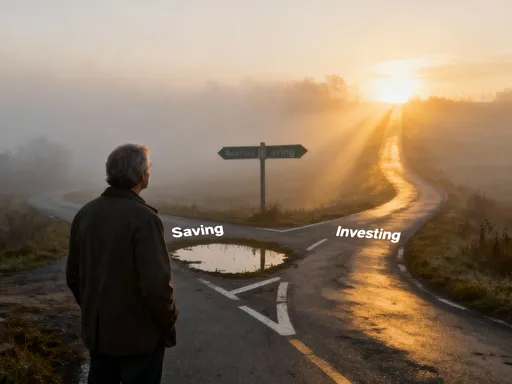
How I Mastered the Rhythm of Investing to Retire Early—And What It Really Takes
What if retiring early isn’t about earning more, but about syncing your investments to the right rhythm? I learned this the hard way—after years of chasing returns, I realized timing, discipline, and emotional control matter more than any single stock pick. This is the real story behind my journey: the missteps, the mindset shifts, and the strategy that finally worked. It’s not about shortcuts—it’s about consistency, risk awareness, and building a system that grows with life. Financial freedom didn’t come from a lucky trade or sudden windfall, but from learning how to stay in step with my own financial tempo, even when the market danced to a chaotic beat.
The Myth of Early Retirement: More Than Just Saving
Early retirement is often portrayed as a life hack—live frugally, save 50% of your income, invest in index funds, and wait. While saving aggressively is undeniably important, it’s only one piece of a much larger puzzle. Many people who follow this formula closely still find themselves falling short of their retirement goals. Why? Because they overlook the critical role of investment rhythm—the deliberate, consistent way capital is deployed and managed over time. Saving money is necessary, but without a coherent investment strategy, even large nest eggs can fail to generate sustainable income or withstand market downturns.
The truth is, early retirement isn’t just about how much you save—it’s about how wisely you grow what you save. Consider two individuals earning the same salary, saving at the same rate, and investing in similar assets. One maintains a steady investment pace, rebalances regularly, and avoids emotional decisions. The other invests sporadically, pulls out during downturns, and jumps into trending assets without a plan. Over two decades, their outcomes can differ dramatically. The first person benefits from compounding, tax efficiency, and reduced behavioral risk. The second may have saved just as much, but their returns suffer from timing errors and inconsistency. This gap illustrates that early retirement is not a mechanical equation; it’s a dynamic process shaped by rhythm, discipline, and resilience.
Conventional wisdom often oversimplifies this journey. Financial advice tends to focus on rules of thumb like the 4% withdrawal rule or the target of saving 25 times your annual expenses. These guidelines are helpful starting points, but they don’t account for personal variability—how income changes, how life events disrupt plans, or how market cycles impact real-world outcomes. The people who succeed in retiring early aren’t necessarily the ones who saved the most or took the biggest risks. They are often the ones who developed a repeatable, sustainable investment process that adapted to their lives without breaking under pressure. This process isn’t about chasing high returns every year; it’s about avoiding catastrophic losses, staying invested through volatility, and letting time do the heavy lifting.
Emotional discipline is just as important as financial strategy. Markets will always fluctuate. News headlines will always create fear or excitement. The investor with rhythm doesn’t react to every shift—they respond according to a pre-established plan. They understand that missing the best days in the market can drastically reduce long-term returns, and that staying invested consistently is more valuable than trying to time entries and exits. This mindset shift—from seeking performance to preserving progress—is what separates those who reach early retirement from those who remain stuck in the accumulation phase, no matter how hard they save.
Understanding Investment Rhythm: The Pulse Behind Wealth Building
Investment rhythm is the steady, intentional pattern of managing money over time. It’s not about predicting the future or picking winning stocks; it’s about creating a reliable financial cadence—like a heartbeat—that sustains growth through both calm and turbulent periods. Think of it as the internal metronome of your financial life. Just as a musician stays in tempo to produce harmonious music, an investor with rhythm stays aligned with their long-term plan, regardless of market noise. This rhythm is built on consistency: regular contributions, periodic rebalancing, and emotional stability in the face of volatility.
At its core, investment rhythm means avoiding the extremes of overreaction. It’s easy to get excited when markets surge and want to invest more, or to panic and sell when prices drop. But these emotional responses disrupt the natural compounding process. A disciplined investor doesn’t try to time the market; they time their actions to their life cycle. For example, someone in their 30s might prioritize growth by consistently investing in equity index funds each month. Someone in their 50s might gradually shift toward income-producing assets like dividend-paying stocks or bonds, adjusting their portfolio in measured steps rather than sudden shifts. This gradual evolution reflects a rhythm that’s responsive, not reactive.
Real-world analogies help clarify this concept. Consider breathing: inhale and exhale follow a natural, steady pattern. If you hold your breath during stress, your body suffers. Similarly, pulling money out of the market during a downturn—or hesitating to invest when valuations are low—can damage long-term results. Another analogy is a garden. You don’t dig up seeds every week to check if they’re growing. You plant, water consistently, and trust the process. Investing works the same way. The most successful outcomes come not from constant tinkering, but from patience and routine care.
What makes investment rhythm powerful is its compounding effect—not just on money, but on confidence. When you follow a consistent process, you build trust in your strategy. This trust becomes a psychological buffer during downturns. Instead of questioning every decision, you rely on the system you’ve built. Over time, this reduces decision fatigue and prevents costly mistakes. You stop chasing performance and start focusing on progress. And because the rhythm is personalized—aligned with your income, goals, and risk tolerance—it feels sustainable, not stressful. This is the foundation of lasting financial success: not brilliance, but reliability.
Building Your Investment Cadence: Aligning Strategy with Life Stages
Your investment rhythm should evolve as your financial life changes. In the early accumulation phase, when time is on your side, the focus should be on growth. This typically means allocating a higher percentage of your portfolio to equities, especially low-cost index funds that provide broad market exposure. Regular contributions—such as automatic monthly transfers into a retirement account—help establish discipline and take advantage of dollar-cost averaging. This method smooths out purchase prices over time, reducing the risk of buying at market peaks. The goal during this phase isn’t to maximize short-term returns, but to build a habit of consistent investing, regardless of market conditions.
As you move into mid-career, your rhythm may need to adapt. Income might increase, but so do responsibilities—raising children, buying a home, supporting aging parents. This is when flexibility becomes important. You may not always be able to increase contributions, but you can maintain consistency. For example, if a job change temporarily reduces income, you might pause aggressive investing but continue contributing enough to capture employer matches or tax benefits. The key is to avoid stopping altogether. Even small, regular investments keep the rhythm alive and preserve the compounding effect. This phase is also a good time to assess risk tolerance and begin diversifying beyond U.S. equities—perhaps adding international funds or real estate investment trusts (REITs) to spread exposure.
Approaching retirement, the rhythm shifts again. The focus moves from growth to preservation and income generation. This doesn’t mean abandoning equities entirely—longevity means you’ll still need growth to outpace inflation—but it does mean reducing volatility. A common approach is to gradually increase the allocation to bonds or other fixed-income assets. Some investors use a ‘bucket’ strategy, where they divide their portfolio into time-based segments: cash for the next 1–2 years, bonds for years 3–7, and equities for longer-term growth. This structure supports a steady withdrawal plan without forcing sales during market declines.
Major life events—marriage, job loss, health issues—can disrupt even the best-laid plans. But a strong investment rhythm includes built-in adaptability. For example, after a market correction, instead of panicking, you might view it as an opportunity to rebalance—selling overperforming assets and buying underpriced ones to maintain your target allocation. After a raise, you might increase contributions rather than lifestyle spending. These decisions, made calmly and systematically, reinforce discipline and keep you on track. The goal isn’t perfection, but resilience: a strategy that bends without breaking.
Risk Control: The Silent Engine of Sustainable Returns
Growth captures headlines, but risk control keeps portfolios intact. Many investors focus on returns, but the most successful ones prioritize protection. Without effective risk management, even high-performing portfolios can collapse under stress. Consider the 2008 financial crisis: some investors lost 50% or more of their portfolio value. Those who panicked and sold locked in those losses. Those who stayed the course recovered—but only if their portfolios were structured to survive the downturn. This is where risk control becomes essential. It’s not about avoiding risk entirely—that’s impossible in investing—but about managing it intelligently.
One of the most effective tools is diversification. This means spreading investments across asset classes—stocks, bonds, real estate, commodities—not just within one category. It also means diversifying geographically and across market capitalizations. A portfolio that includes U.S. large-cap stocks, international equities, and Treasury bonds is more resilient than one concentrated in a single sector. Diversification doesn’t guarantee profits or prevent losses, but it reduces the impact of any single failure. Another key strategy is using cash buffers. Holding 6–12 months of living expenses in liquid accounts allows you to avoid selling investments during downturns to cover emergencies. This simple step can preserve long-term growth potential.
Behavioral risk is just as dangerous as market risk. Investors often make poor decisions under stress: selling low, buying high, chasing trends, or avoiding the market altogether. A consistent investment rhythm helps counteract these impulses. When you have a plan, you’re less likely to act emotionally. Automation supports this—setting up automatic contributions removes the temptation to delay investing when markets feel uncertain. Similarly, scheduled portfolio reviews—once a year, for example—prevent impulsive changes and ensure alignment with long-term goals.
Another often-overlooked risk is sequence of returns, especially in early retirement. If you begin withdrawing from your portfolio during a market downturn, the damage can be severe and long-lasting. For example, withdrawing 4% annually might be sustainable in a rising market, but if the first few years of retirement see negative returns, the same withdrawal rate could deplete the portfolio prematurely. To mitigate this, some investors adopt a flexible withdrawal strategy—reducing spending during downturns or using a cash reserve to avoid selling assets at a loss. These tactics aren’t about maximizing income; they’re about ensuring survival.
Practical Tactics: Tools and Habits That Support Consistency
Even the best strategy fails without execution. This is where practical tools and daily habits make the difference. Automation is one of the most powerful allies in maintaining investment rhythm. Setting up automatic transfers from your paycheck to investment accounts ensures consistency, even when motivation wanes. Many employers offer direct deposit options that split income across checking, savings, and retirement accounts—making it easy to save before you even see the money. This ‘pay yourself first’ approach removes willpower from the equation and turns saving into a default behavior.
Another essential habit is regular portfolio maintenance. Just as a car needs oil changes, your investments need periodic checkups. Once a year, review your asset allocation to ensure it still aligns with your goals and risk tolerance. If one asset class has grown significantly, it may now represent a larger share of your portfolio than intended—increasing your exposure to that sector. Rebalancing sells the winners and buys the laggards, maintaining your target mix. This isn’t about market timing; it’s about discipline. Studies show that rebalanced portfolios often outperform non-rebalanced ones over time, not because of higher returns, but because of reduced risk.
Tracking progress is also important, but it should be simple. Overly complex spreadsheets or constant monitoring can lead to analysis paralysis or emotional reactions. A basic dashboard—showing total net worth, asset allocation, and contribution rate—is usually enough. Some investors use free tools like personal finance apps or brokerage dashboards to visualize their progress. The goal isn’t to obsess over daily fluctuations, but to stay aware of long-term trends. When life changes—job loss, reduced income, or increased expenses—this clarity helps you adjust without losing sight of the big picture.
During tough times, simplicity is your friend. If you lose your job, for example, you might pause contributions but avoid touching retirement accounts. If the market crashes, you resist the urge to sell and instead view it as a chance to buy at lower prices. These decisions are easier when you have a plan. Writing down your investment policy statement—your goals, risk tolerance, and strategy—creates a reference point during uncertainty. It serves as a financial compass, guiding you back to your rhythm when emotions pull you off course.
Case Comparisons: Who Succeeded, Who Struggled, and Why
Consider two individuals, both professionals in their early 30s, earning similar incomes and starting to invest at the same time. Sarah follows a steady rhythm: she contributes 15% of her income to a diversified portfolio of index funds, increases contributions with each raise, and rebalances annually. She doesn’t check her account daily and avoids financial news during market drops. Over 18 years, her portfolio grows steadily, benefiting from compounding and consistent contributions. By age 48, she retires with a portfolio that supports her desired lifestyle.
David, on the other hand, is more reactive. He invests aggressively when the market is rising but pulls out during downturns, fearing further losses. He experiments with individual stocks, crypto, and ‘hot’ sectors, often influenced by social media or news. As a result, he misses key recovery periods and underperforms the market. He also stops contributing during job transitions, breaking his investment rhythm. By age 60, he’s still working, frustrated that his savings haven’t grown as expected.
Their outcomes aren’t due to differences in intelligence or income—they stem from rhythm. Sarah’s discipline allowed her to stay invested through volatility, capturing the full benefit of market recoveries. David’s emotional decisions led to timing errors, reducing his effective return. Research shows that missing just the 10 best days in the market over a decade can cut returns in half. David likely missed many of those days by being out of the market at critical moments. Sarah didn’t outperform because she was smarter—she succeeded because she was steadier.
These cases highlight a powerful truth: consistency beats cleverness. You don’t need to predict the future to win. You just need to stay in the game. The tools are available to everyone—low-cost funds, automation, diversification. What separates success from struggle is behavior. Sarah built systems that removed emotion from decision-making. David relied on instinct, which is vulnerable to fear and greed. The lesson isn’t to never adjust your strategy—it’s to do so deliberately, not impulsively. A well-tuned investment rhythm turns time into an ally, not an obstacle.
The Long Game: Staying on Beat Through Uncertainty
Retiring early doesn’t end the financial journey—it transforms it. The challenge shifts from building wealth to preserving it. Now, instead of adding to your portfolio, you’re withdrawing from it. This changes the rhythm. The same discipline that helped you accumulate now supports sustainable spending. You must manage withdrawals carefully, adjusting for inflation, market performance, and lifestyle needs. Some years, you may need to reduce spending to avoid selling assets at a loss. Other years, strong returns may allow for modest increases. The key is flexibility within a framework.
Mental engagement remains crucial. Retirement can bring a sense of finality, but your financial plan is still alive. Regular reviews—quarterly or annually—help you stay aligned with reality. You might adjust your asset allocation to reflect longer life expectancy or changing health needs. You may also explore part-time work or passive income streams to reduce withdrawal pressure. These aren’t signs of failure; they’re signs of adaptability. The investor with rhythm doesn’t cling to a rigid plan—they evolve with it.
Ultimately, financial freedom isn’t about reaching a number and stopping. It’s about creating a sustainable, low-stress relationship with money. It’s about sleeping well at night, knowing your system is designed to last. There’s no single path to early retirement, but the most reliable one combines awareness, patience, and consistency. It’s not flashy. It doesn’t make headlines. But it works. By mastering your investment rhythm, you don’t just retire early—you retire with confidence, clarity, and peace of mind. And that, more than any number, is the true measure of success.