Jungle Feasts & Hidden Regrets: Dining in the Amazon You Won’t See on Instagram
Ever tasted grilled piranha by firelight deep in the Amazon rainforest? I did—and it was amazing. But what looked like a dreamy food adventure almost turned sour. Between exotic dishes and cultural missteps, specialty dining here is wilder than you think. This isn’t just about food; it’s about respect, preparation, and knowing what you’re actually biting into. The Amazon offers one of the planet’s most immersive culinary experiences, where every meal tells a story of survival, tradition, and harmony with nature. Yet for all its wonder, this region demands more than curiosity—it requires mindfulness, awareness, and a willingness to listen before you taste.
The Allure of Amazonian Specialty Dining
Dining in the Brazilian Amazon is not simply about nourishment—it’s an invitation into the heart of a living culture. Travelers often arrive seeking authenticity, and few experiences deliver as vividly as sharing a meal with local families along the winding tributaries of the Rio Negro or near the bustling port city of Manaus. Here, food is deeply tied to the rhythms of the river, the seasons of the forest, and generations of knowledge passed down through oral tradition. The scent of wood smoke curling over open grills, the sound of fish sizzling on skewers, and the vibrant purple stain of freshly poured açaí on wooden bowls—all of these form a sensory tapestry unlike any other on Earth.
At the center of Amazonian cuisine lies a rich variety of ingredients found nowhere else. Tucunaré, a speckled cichlid prized for its firm, flavorful flesh, is often grilled whole over glowing embers, seasoned only with coarse salt and a squeeze of wild lime. Açaí na tigela, served in hollowed-out gourds or ceramic bowls, combines mashed açaí berries with cassava flour or banana, creating a dense, earthy smoothie that fuels daily life in riverside communities. Farofa, toasted manioc flour cooked with butter and herbs, accompanies nearly every meal, adding texture and absorbing rich sauces. These are not novelty foods created for tourists; they are staples that sustain life in one of the world’s most biodiverse regions.
What makes Amazonian dining so compelling is its raw honesty. There’s no pretense, no fusion trends or molecular gastronomy—just food prepared with intention and necessity. Markets like Mercado Adolpho Lisboa in Manaus offer a window into this reality, where pirarucu—giant river fish that can weigh over 200 pounds—is sold in thick slabs, its skin marked with the telltale pattern of traditional smoking techniques. Vendors display baskets of tucumã, pupunha, and bacaba palms, their fruits rich in oils and nutrients essential to local diets. To eat here is to participate in a centuries-old relationship between people and the rainforest, where every ingredient has a purpose and nothing goes to waste.
Pitfall #1: Misunderstanding Local Food Culture
One of the most common missteps travelers make is approaching Amazonian food through a lens of exoticism. It’s easy to snap a photo of a roasted armadillo or a plate of fried insects and label it “wild” or “strange,” but such reactions often stem from cultural disconnect rather than genuine understanding. For ribeirinho families—traditional riverine dwellers—and Indigenous communities across the Amazon Basin, these foods are not spectacles; they are practical, nutritious, and deeply meaningful. To dismiss them as primitive or bizarre is to overlook the resilience and wisdom embedded in these culinary traditions.
Take tucumã, for example—a bright orange palm fruit with a nutty flavor and high fat content, often eaten raw or roasted. Some visitors react with skepticism when offered this unfamiliar food, asking, “You really eat that?” Such questions, though perhaps meant innocently, can carry unintended condescension. In reality, tucumã has sustained communities for generations, especially during periods when fish stocks are low or flooding disrupts agriculture. Similarly, game meats like capybara, deer, or even wild boar are not consumed for shock value but because they represent a sustainable protein source carefully managed within local ecological knowledge.
Respect begins with reframing the narrative. Instead of viewing Amazonian cuisine as a collection of oddities, travelers should see it as a reflection of adaptation, identity, and environmental stewardship. Meals are often communal events, shared among extended families and neighbors, with elders teaching younger generations how to clean fish, prepare farinha, or identify edible plants. These moments are not performances staged for guests—they are everyday acts of cultural continuity. When visitors treat them as such, dining becomes not just a highlight of the journey, but a bridge to deeper human connection.
Pitfall #2: Trusting the Wrong Tour Operators
While many travelers seek authentic Amazonian meals, not all tour operators provide safe or ethical experiences. Unlicensed guides and budget-focused agencies sometimes prioritize sensationalism over safety, offering “extreme” food challenges that misrepresent local customs and endanger health. Claims like “Try monkey meat!” or “Eat live ants!” may attract clicks online, but they rarely reflect real Amazonian diets and often violate conservation laws. In truth, most Indigenous and ribeirinho communities do not consume primates, and many have strict taboos against certain animals based on spiritual or ecological beliefs.
More concerning is the risk posed by improper food handling. Without access to consistent refrigeration or clean water, poorly managed tours can serve undercooked meat, contaminated fish, or dishes prepared with unsafe ingredients. One traveler reported severe gastrointestinal illness after eating river turtle stew served at an uncertified lodge—an experience that could have been avoided with proper sourcing and cooking standards. Even common dishes like tacacá, a hot soup made with jambu leaves and tucupi (a fermented manioc broth), require careful preparation to neutralize naturally occurring toxins.
To protect both health and cultural integrity, travelers should choose dining experiences offered by certified eco-lodges, community-based tourism cooperatives, or government-recognized guides. These organizations typically employ trained cooks who follow hygiene protocols and source ingredients responsibly. They also ensure that meals are presented with context—explaining origins, significance, and proper etiquette—so guests can enjoy food with appreciation rather than awe. By supporting responsible operators, visitors contribute to sustainable tourism that benefits local economies without exploiting traditions.
Pitfall #3: Ignoring Dietary & Health Risks
The Amazon’s humid, tropical environment creates unique challenges for food safety, particularly for travelers unaccustomed to its conditions. High temperatures accelerate spoilage, and many remote areas lack reliable electricity, making refrigeration inconsistent. This increases the risk of bacterial growth in meat, dairy, and seafood if not handled properly. Additionally, unfamiliar proteins—such as certain insects, amphibians, or wild game—can trigger allergic reactions in individuals with sensitivities, even if they’ve never experienced issues before.
Digestive discomfort is another common concern. Foods like pupunha (peach palm fruit) or cupuaçu-based desserts contain complex fibers and compounds that may be difficult for some stomachs to process initially. Insect-based snacks, while rich in protein and increasingly promoted as sustainable superfoods, can cause bloating or nausea in first-time eaters. Even seemingly harmless items like raw salads or unpeeled fruits pose risks if washed with untreated water, which may carry pathogens such as giardia or E. coli.
Preparation is key to minimizing these risks. Travelers should drink only filtered, boiled, or bottled water and avoid ice unless it’s confirmed to be made from purified sources. Opting for cooked, hot meals over cold or raw dishes significantly reduces exposure to contaminants. Before departure, consulting a travel medicine specialist can help identify potential dietary concerns and provide guidance on preventive measures, such as carrying oral rehydration salts or probiotics. It’s also wise to pack a basic medical kit with antidiarrheals, antihistamines, and water purification tablets, especially when venturing into more isolated regions where medical care may be hours away by boat.
How to Choose the Right Dining Experience
Selecting a meaningful and safe Amazonian dining experience requires research, intention, and respect. Start by visiting well-established markets in cities like Manaus or Tefé with a knowledgeable local guide who can explain what’s being sold and why. At Mercado Adolpho Lisboa, for instance, vendors proudly display smoked pirarucu, jars of regional honey, and baskets of fresh herbs used in traditional medicine and cooking. A guide can help interpret labels, recommend seasonal specialties, and introduce travelers to family-run stalls that prioritize quality and authenticity.
Even more rewarding are farm-to-table experiences hosted by agroforestry families or community cooperatives. These immersive visits allow guests to walk through cultivated forest gardens, see how manioc is processed into farinha, and even assist in preparing a meal using a traditional clay stove called a fogão de barro. Such hands-on participation fosters a deeper appreciation for the labor and knowledge behind each dish. Unlike staged demonstrations designed for quick photo ops, these encounters unfold at the pace of daily life, offering genuine insight into how food shapes community and identity.
When interacting with hosts, language matters. Rather than reacting with surprise or judgment, ask open-ended questions with genuine curiosity: “What is this dish called?” “How is it usually prepared?” “Is this something your family eats often?” These simple inquiries signal respect and openness, encouraging hosts to share stories and meanings behind the food. Over time, these conversations transform a meal into a shared human moment—one that lingers far longer than the taste on the tongue.
The True Taste of the Amazon: Stories from the River
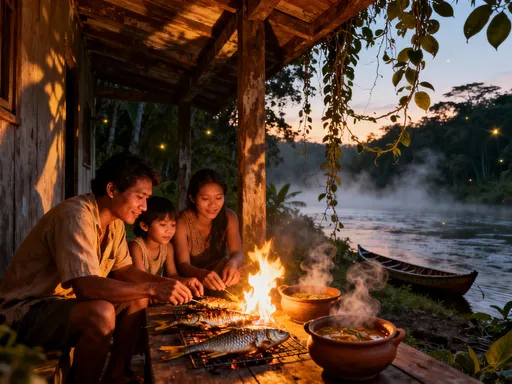
Beyond the ingredients and techniques, the essence of Amazonian cuisine lives in its moments of connection. Picture a late afternoon on a stilted wooden house along the Japurá River, where a grandmother fries fish over a clay stove while grandchildren stir a pot of manioc broth. The air carries the sharp, numbing tingle of jambu leaves, known for their mild anesthetic effect that enhances the perception of flavor. A father returns from fishing with a string of tucunaré, cleaned and scaled by his daughter using a machete with practiced ease. As dusk settles, the family gathers around a low table, passing bowls of farofa and sharing stories of the day’s catch.
These scenes are not curated for outsiders—they are the quiet, enduring rhythms of life in the rainforest. Food here is never taken for granted. Every fish is honored, every fruit harvested with care, every scrap reused. Pirarucu bones become soup stock; leftover scales are dried and ground into natural exfoliants. This deep respect for resources reflects a worldview rooted in balance and reciprocity with nature. Hunters follow rotational practices, taking only what is needed and allowing populations to regenerate. Fishermen use selective methods to avoid depleting stocks, passing down these rules orally from generation to generation.
For travelers lucky enough to be welcomed into such spaces, the experience transcends taste. It becomes a lesson in mindfulness, sustainability, and interdependence. The flavor of a simple grilled fish gains depth when you’ve seen it pulled from the river, scaled by hand, and cooked over wood gathered from fallen branches. The sweetness of açaí feels richer when you’ve watched it being mashed in a wooden mortar, its deep purple juice staining fingers and bowls alike. In these moments, food ceases to be just sustenance—it becomes memory, meaning, and mutual respect.
Conclusion: Eat Mindfully, Travel Deeper
Dining in the Amazon is more than a culinary adventure—it is an act of cultural engagement that demands humility, awareness, and responsibility. The region’s rich food traditions offer a rare window into ways of living that prioritize harmony with nature, community resilience, and generational knowledge. Yet these traditions are not static displays for tourist consumption; they are living practices shaped by history, ecology, and identity. To truly appreciate them, travelers must move beyond the pursuit of novelty and embrace a mindset of learning and respect.
The pitfalls are real: misunderstanding cultural context, trusting unreliable operators, overlooking health risks. But so are the rewards—authentic connections, unforgettable flavors, and a deeper understanding of one of the world’s most vital ecosystems. By choosing responsible tours, preparing thoughtfully for dietary needs, and approaching meals with openness rather than judgment, visitors can ensure their presence supports rather than disrupts.
Every bite in the Amazon carries meaning. It speaks of rivers teeming with life, forests rich with edible plants, and people who have thrived here for millennia. To savor this cuisine is not just to enjoy a meal—it is to honor a way of life. So when you sit down to eat beneath the canopy, with the sounds of the jungle all around, remember: the most important ingredient is not in the dish. It’s in your intention. Eat mindfully. Travel deeper. And let every meal become a step toward understanding.