What Hallstatt’s Hidden Traditions Taught Me About True Culture
Nestled between misty mountains and a mirror-like lake, Hallstatt feels like a dream you don’t want to wake up from. But beyond the postcard views, I discovered something deeper—centuries-old customs still alive in quiet alleys and local workshops. This isn’t just a pretty town; it’s a living museum where culture isn’t performed, it’s lived. From salt-mining legends to handcrafted woodcarvings, I’ll take you where most tourists never go. What I found was not just beauty, but a quiet resilience of tradition, a rhythm of life that has endured through generations. This is not about seeing Hallstatt—it’s about understanding it.
First Glimpse: The Myth and Reality of Hallstatt
Most travelers first see Hallstatt from the ferry, gliding across the still waters of Lake Hallstatt as the village emerges like a painted backdrop. Whitewashed houses with flower-filled balconies cling to the steep mountainside, their reflections shimmering in the glassy surface. The scene is so perfect it feels unreal, as though it were designed for postcards rather than people. And indeed, millions come each year chasing that image—camera in hand, seeking the ideal shot. But this overwhelming beauty, while breathtaking, can also be a barrier. It draws attention to the surface, making it easy to miss the deeper layers beneath.
The myth of Hallstatt is one of pristine Alpine charm, a timeless escape from the modern world. Yet the reality is more nuanced. Behind the picture-perfect façade lies a community rooted in continuity and quiet pride. While the lakeside promenade buzzes with visitors, just a few steps up the narrow alleys, life unfolds at a different pace. Locals greet each other by name, baskets in hand from the morning market. Smoke curls from chimneys in the late afternoon, and the scent of fresh bread drifts from the bakery window. These are not staged moments—they are the fabric of daily life.
This contrast between myth and reality is not unique to Hallstatt, but here it is especially pronounced. The village’s UNESCO World Heritage status and global fame have brought both recognition and pressure. The influx of tourists, while economically beneficial, risks turning culture into spectacle. The challenge for the thoughtful traveler is to look beyond the iconic view, to resist the urge to simply collect photos, and instead seek the substance behind the scenery. Because Hallstatt’s true value isn’t in how it looks—it’s in how it lives.
Walking Through Time: The Soul of Hallstatt’s Streets
To walk the streets of Hallstatt is to step into a living timeline. The cobblestones underfoot are worn smooth by centuries of footsteps, each groove a silent testament to generations who have lived, worked, and passed through. The village is compact, barely half a mile long, yet every turn reveals a new detail—a carved lintel, a weathered doorframe, a hidden courtyard where geraniums spill from clay pots. These are not decorative flourishes; they are expressions of a culture that values permanence, craftsmanship, and connection to place.
As you move through the narrow lanes, the sounds shift. The chatter of tourists fades, replaced by the clang of a blacksmith’s hammer, the murmur of an elder speaking in the local dialect, or the chime of church bells marking the hour. Family-run shops line the path—small, unassuming, with hand-lettered signs. One sells hand-knit wool socks, another offers wooden toys carved from local pine. The owners often sit behind the counter, not as performers, but as part of the household. There is no push to sell; instead, there is an invitation to pause, to ask questions, to share a moment.
What stands out most is the harmony between old and new. Modern life exists here—smartphones, delivery bikes, internet cafes—but it does not dominate. Instead, it integrates quietly, like a new thread woven into an existing tapestry. A teenager texts on a bench beside a 500-year-old chapel. A mother pushes a stroller past a stone well that once supplied the entire village. This balance is not accidental. It is the result of a community that values its heritage not as a relic, but as a guide. In Hallstatt, history is not something to be studied in books—it is lived, breathed, and passed down in the smallest gestures.
Salt, History, and Identity: The Heart of Hallstatt’s Heritage
No understanding of Hallstatt is complete without acknowledging its foundation: salt. For over 7,000 years, this mineral has shaped the town’s destiny. Known as “white gold,” salt was once so valuable it was traded like currency. The Hallstatt salt mine, one of the oldest in the world, lies deep beneath the mountain, a labyrinth of tunnels carved by hand over millennia. Visiting Salzwelten, the modern tourist experience of the mine, is more than a descent into rock—it is a journey into the soul of the region.
The tour begins with a steep funicular ride into the mountain, followed by a walk through dimly lit tunnels where wooden ladders and rails date back centuries. Guides explain how miners, some as young as ten, worked in darkness, using only candles and hand tools. One of the most powerful moments is standing in the ancient shafts where archaeologists discovered a remarkably preserved miner’s body, now known as the “Man in Salt.” Found in the 17th century, his remains offer a tangible connection to the past, a reminder that history is not abstract—it is human.
Salt did more than sustain livelihoods; it built civilization here. The wealth generated from salt mining funded churches, schools, and homes, allowing Hallstatt to flourish long before tourism existed. It also fostered trade routes that connected this remote valley to distant lands, bringing ideas, goods, and cultural exchange. Today, salt remains a symbol of resilience and identity. Local pride is tied to the knowledge that their ancestors were not just survivors, but innovators—people who carved prosperity from the earth itself.
The mine is not just a historical site; it is a place of memory and continuity. Schoolchildren visit to learn about their heritage. Families recount stories of relatives who once worked underground. And the salt harvested today, though on a smaller scale, is still sold in shops as a reminder of where it all began. In a world that often forgets its roots, Hallstatt’s relationship with salt is a powerful lesson: culture grows from necessity, from labor, from the deep connection between people and place.
Crafted by Hand: Meeting Hallstatt’s Artisans
Wander beyond the main square, and you’ll find workshops tucked into old stone buildings, where artisans work with quiet dedication. These are not souvenir factories churning out mass-produced trinkets. They are family workshops where skills are passed from parent to child, where time is measured not in deadlines but in strokes of the chisel, loops of the needle, or turns of the potter’s wheel. In a world obsessed with speed and efficiency, these crafts represent something rare: the value of slowness, precision, and intention.
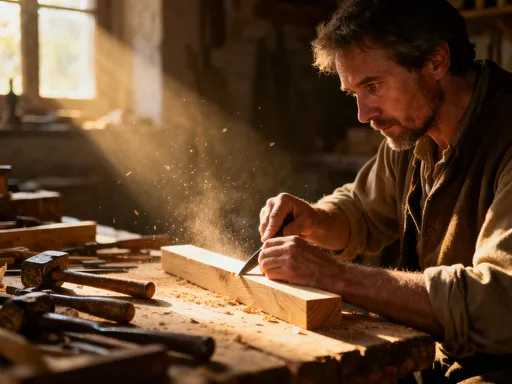
Woodcarving is one of Hallstatt’s most enduring traditions. In a small atelier near the cemetery, a craftsman spends hours shaping intricate figures—a stag, a saint, a village scene—each detail carved from linden or pine. He learned the trade from his father, who learned it from his. “It’s not just about the hands,” he says. “It’s about the heart. You have to feel the wood, listen to it.” His pieces are not made for display cases; many are used in local homes, churches, or festivals, serving both beauty and purpose.
Elsewhere, an elderly woman embroiders traditional patterns onto linen, her fingers moving with practiced ease. The motifs—edelweiss, snowflakes, interlocking hearts—are more than decoration; they carry meaning, often tied to protection, love, or Alpine identity. Nearby, a potter shapes clay on a wheel, crafting mugs and bowls glazed in earthy tones that echo the surrounding landscape. These objects are not perfect by industrial standards, but that is their strength. Each imperfection tells a story, each piece carries the mark of the maker.
Supporting these artisans is not just an act of shopping—it is an act of cultural preservation. When travelers choose handmade over factory-made, they help sustain traditions that might otherwise fade. These crafts are not static; they evolve, incorporating new ideas while honoring old methods. But they require demand, attention, and respect. To buy a hand-carved spoon or an embroidered handkerchief is to participate in a legacy, to say, “This matters. This should continue.” In a globalized world where everything begins to look the same, Hallstatt’s artisans remind us that true culture is made by hand, one careful stroke at a time.
Seasonal Rhythms: How Hallstatt Celebrates the Year
In Hallstatt, time is marked not by calendars alone, but by seasons, rituals, and shared rhythms. The year unfolds in a quiet cadence of celebrations that reflect the deep connection between community, nature, and faith. These are not tourist performances; they are lived traditions, observed with sincerity and warmth. To witness one is to glimpse the soul of Alpine life—a culture rooted in gratitude, resilience, and togetherness.
Easter is a time of renewal and reverence. On Good Friday, a solemn procession winds through the village, with locals dressed in traditional dirndls and lederhosen carrying wooden crosses. The bells fall silent, then ring again on Easter morning, signaling resurrection and hope. Families gather for meals featuring lamb, spring vegetables, and decorated eggs—symbols of new life. The atmosphere is not festive in a loud sense, but deeply felt, a quiet affirmation of faith and continuity.
In late autumn, the Almabtrieb marks the return of cattle from summer pastures high in the mountains. Dressed with flower headdresses and hand-carved bells, the animals parade through the village to cheers and blessings. Farmers believe the health of the herd ensures the health of the community, and the event is both joyful and solemn. It is a celebration of labor, of nature’s cycles, and of interdependence—a reminder that survival here has always depended on cooperation with the land.
And then there is Christmas. While many Alpine towns host bustling markets for tourists, Hallstatt’s observance remains intimate. The market is small, held in the square beside the church, with stalls selling beeswax candles, wooden ornaments, and mulled wine. Carols are sung in the local dialect, their melodies echoing through the snow-covered streets. Midnight Mass draws families together, the candlelight casting soft shadows on ancient stone walls. There is no commercial rush, no artificial glitter—just warmth, light, and a sense of belonging.
These seasonal traditions are not performances for outsiders. They are acts of identity, repeated year after year with quiet devotion. They bind generations, reinforce values, and offer stability in a changing world. For the traveler lucky enough to witness one, the lesson is clear: culture is not something you see—it is something you experience, moment by moment, season by season.
Beyond the Crowds: Finding Quiet Cultural Moments
It would be dishonest to ignore the challenges Hallstatt faces. In recent years, overtourism has strained its delicate balance. On summer weekends, thousands arrive by train, boat, and bus, flooding the narrow streets. The village, with a population of just over 700, can feel overwhelmed. The very beauty that draws people risks being eroded by their presence. Yet, within this challenge lies an opportunity—for travelers to visit not as consumers, but as guests.
The key to a meaningful experience is timing and intention. Arriving early in the morning, before the first ferry docks, transforms the village. The mist still hovers over the lake. The only sounds are birdsong and the gentle lap of water. In these quiet hours, Hallstatt reveals itself—not as a postcard, but as a home. Locals walk their dogs, unlock shop doors, and sip coffee on their porches. This is the real rhythm, undisturbed.
Visiting in the off-season—late autumn or early spring—offers even deeper access. Fewer crowds mean more space to connect. A chance conversation with a baker, a shared nod with a fisherman mending his net, an invitation to a local event—these moments become possible when the pressure of mass tourism recedes. Staying overnight, rather than coming on a day trip, allows for a slower pace, a chance to see how life unfolds after the day visitors leave.
There are also lesser-known paths—the old pilgrimage trail to the Catholic cemetery, the hidden viewpoint behind the Protestant church, the footpath along the eastern shore of the lake. These places offer solitude and perspective. They remind us that travel is not about checking boxes, but about presence. When we move quietly, respectfully, we are more likely to be welcomed in. Culture is not extracted; it is shared. And it is in these quiet, unscripted moments—sipping tea with a woodcarver, listening to a hymn in a nearly empty chapel—that we begin to understand what Hallstatt truly is.
Why Cultural Travel Matters: A Personal Reflection
My time in Hallstatt changed me. It shifted how I see travel—not as a series of destinations to conquer, but as an invitation to listen, to learn, to belong, even if only briefly. I came for the beauty, but I stayed for the depth. I realized that true culture is not in the photo, but in the conversation; not in the souvenir, but in the story behind it. It is not something you take, but something you receive—with gratitude and humility.
This kind of travel matters now more than ever. In a world where globalization flattens differences and digital life distances us from place, the preservation of intangible heritage—customs, crafts, dialects, rituals—becomes urgent. These are not quaint relics; they are vital expressions of human diversity. When we support them, we do more than sustain tradition—we affirm the value of local knowledge, of community, of continuity.
Travelers have a role to play. We can be stewards, not just spectators. By choosing to visit mindfully, to spend time in small shops, to attend local events with respect, to ask questions with curiosity rather than entitlement, we contribute to cultural survival. We signal that we value authenticity over convenience, connection over consumption.
Hallstatt taught me that culture is not a performance. It is not something turned on for visitors and switched off when they leave. It is lived every day—in the way bread is baked, in the way stories are told, in the way hands shape wood and wool and clay. It is quiet, persistent, and deeply human. And if we travel with care, with openness, with patience, we may just find that places like Hallstatt don’t just show us their culture—they change ours.