You Won’t Believe What I Found While Shooting Street Style in Ljubljana
Ljubljana isn’t just a postcard-perfect capital — it’s a living gallery where every alley tells a story. As I wandered with my camera, I wasn’t chasing landmarks; I was hunting moments. The real magic? Hidden in boutique windows, local markets, and the quiet confidence of Slovenians choosing what to wear. This is shopping, yes — but seen through a lens, it becomes something richer: culture, identity, and beauty in motion. With its pastel-toned facades, tree-lined promenades, and unhurried rhythm, Ljubljana offers a rare clarity for photographers seeking authenticity. Here, commerce and creativity flow together like the river that cuts through its heart, turning everyday choices into visual poetry.
The First Frame: Why Ljubljana Feels Like a Photographic Secret
Ljubljana reveals itself slowly, like a well-composed photograph developing in real time. Unlike the bustling energy of Paris or the overwhelming density of Rome, this Slovenian capital unfolds with quiet elegance. Its city center is compact, almost intimate, designed for strolling rather than rushing. Every step offers balance — between old and new, nature and architecture, silence and sound. For a photographer, this harmony is not just pleasing to the eye; it’s a gift. The absence of heavy traffic, the abundance of greenery, and the thoughtful urban planning create a canvas where even the most ordinary scenes feel curated. It’s no wonder that street photographers often describe Ljubljana as one of Europe’s best-kept secrets.
What makes the city particularly compelling is its pedestrian-first design. Since 2007, much of the historic core has been closed to private vehicles, transforming streets into open-air living rooms. This shift didn’t just reduce noise and pollution — it changed the pace of life. People linger longer, conversations stretch, and gestures become more deliberate. For someone with a camera, this means more time to observe, to anticipate, to wait for the perfect alignment of light, movement, and expression. A woman adjusting her scarf under a linden tree, a bookseller arranging titles in the morning sun — these are not staged moments, but natural compositions born from a city that breathes slowly.
The visual language of Ljubljana is also remarkably consistent. Buildings wear soft hues — peach, sage, cream — with intricate wrought-iron balconies and terracotta roofs. Cobblestone streets reflect rain like mirrors, doubling the beauty of the scene. There are no glaring advertisements or chaotic signage to distract the eye. Instead, there’s a sense of order, a kind of visual calm that allows small details to stand out. A single red umbrella against a gray wall, the shadow of a bicycle on a sunlit pavement — these become the focal points of a photograph not because they’re loud, but because they’re meaningful. In a world where many cities compete for attention, Ljubljana whispers — and in that whisper lies its photographic power.
Cinematic Streets: Where Shopping and Scenery Collide
If Ljubljana is a film set, then Prešeren Square is its central stage. Named after Slovenia’s greatest poet, this open plaza pulses with life without ever feeling crowded. It’s where locals meet for coffee, musicians play folk tunes on weekends, and tourists pause to take in the pink Baroque façade of the Franciscan Church. But for a photographer, the square’s true drama unfolds in the quiet interactions between people and their environment. Watch a woman pause at a flower stall, her hand hovering over a bouquet of deep purple irises. See a man sip espresso at an outdoor table, his reflection caught in the glass of a nearby boutique. These are not just shopping moments — they are micro-stories, rich with color, texture, and emotion.
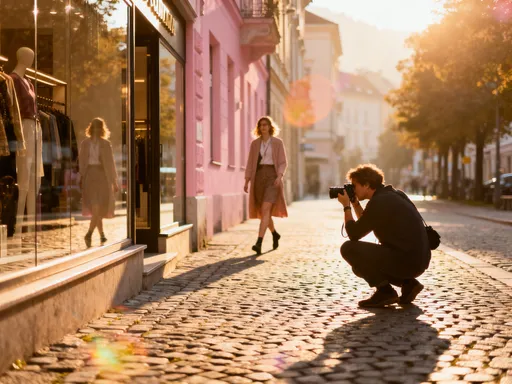
Adjacent to the square, Čopova Street extends like a ribbon of urban poetry. Lined with independent shops, art galleries, and cafés, it’s one of the most photogenic stretches in the city. The street slopes gently, offering natural leading lines for composition. In the early afternoon, sunlight filters through linden trees, casting dappled patterns on the pavement. Shoppers move at a measured pace, often stopping to examine window displays or chat with vendors they know by name. This rhythm creates opportunities for candid photography — a child pressing her nose against a bakery window, an elderly couple sharing a slice of apple strudel on a bench. The key is patience: waiting for the right gesture, the right light, the right alignment of elements within the frame.
Light plays a crucial role in shaping these scenes. In the morning, the low sun bathes the east-facing buildings in warm gold, ideal for silhouette shots against pastel walls. By midday, the light becomes sharper, emphasizing textures — the weave of a linen dress, the grain of wooden market stalls. Late afternoon brings the golden hour, when shadows stretch long and faces glow softly. Photographers who time their walks accordingly can capture the city at its most lyrical. Reflections in puddles, glass windows, or the river itself add layers of depth, turning a simple street scene into a multi-dimensional image. The architecture doesn’t compete with the people; it frames them, enhancing their presence rather than overshadowing it.
Local Markets as Living Studios: From Central Market to Eco-Farmers
Along the banks of the Ljubljanica River, the Central Market stands as a masterpiece of functional design. Conceived by Slovenia’s most revered architect, Jože Plečnik, in the 1930s, it’s more than a place to buy food — it’s a sculptural environment where form and function merge. The covered colonnades stretch along the water, sheltering vendors who sell everything from wild mountain honey to hand-knitted wool socks. The market operates daily, but Saturdays bring a special energy: the organic farmers’ market spills into the surrounding streets, drawing locals committed to sustainable living. For a photographer, this is a living studio — a place where color, movement, and human connection converge.
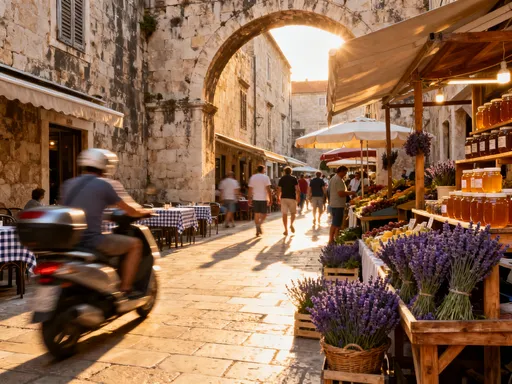
The visual richness here is overwhelming in the best way. Crates of heirloom tomatoes in every shade of red and yellow, baskets of golden chanterelle mushrooms, pyramids of artisanal cheeses wrapped in cloth — each stall is a still life waiting to be framed. The vendors themselves are part of the composition: a woman in a floral apron arranging bunches of lavender, a farmer with sun-weathered hands offering samples of cold-pressed pumpkin seed oil. Their pride in their products is visible, not performative. They aren’t posing for tourists; they’re doing their work with quiet dignity. This authenticity is what makes the market so rewarding to photograph — it’s real life, unfiltered.
Yet with this access comes responsibility. Capturing people in their daily routines requires ethical awareness. The best approach is to be present without intrusion. A smile, a nod, a moment of eye contact can go further than a lens. Some photographers choose to shoot from a distance, using longer focal lengths to preserve privacy. Others engage in brief conversation before raising their camera, asking permission with gestures when language is a barrier. In Ljubljana, most people respond warmly to genuine interest. They understand that being photographed isn’t about exploitation — it’s about recognition. When done with respect, street photography becomes a form of appreciation, a way of saying, “I see you, and your life has beauty.”
The Saturday eco-market, held just beyond the main market area, offers a different rhythm. Here, the focus is on slow food, organic farming, and community. Young families, retirees, and students browse tables laden with pesticide-free vegetables, sourdough bread, and raw goat milk yogurt. The atmosphere is relaxed, even joyful. Children run between stalls, chasing bubbles from a street performer’s wand. Dogs sit patiently under tables, waiting for a crust of bread. These are the moments that define Ljubljana’s culture — not grand events, but small, shared experiences rooted in care for the land and each other. Photographing them is not about capturing perfection, but about honoring the ordinary.
Behind the Glass: Independent Boutiques with Visual Soul
Wander beyond the main squares, and Ljubljana’s creative heart beats strongest in its independent boutiques. Nestled in narrow lanes and tucked behind ivy-covered archways, these small shops are more than retail spaces — they are expressions of personal vision. Many are run by local designers who blend traditional craftsmanship with contemporary aesthetics. You’ll find hand-carved wooden jewelry, linen garments dyed with plant pigments, and ceramic vases shaped by potters from nearby villages. What sets these stores apart is not just the quality of their goods, but the care with which they present them. Window displays are treated as art installations, changing with the seasons and often incorporating natural elements like dried flowers, moss, or river stones.
For photographers, these windows offer endless inspiration. The glass becomes a dual plane — reflecting the street behind while revealing the curated scene within. A woman walking past might appear superimposed over a mannequin wearing a handwoven coat, creating a layered image that blurs reality and artifice. Rainy days enhance this effect, turning windows into shimmering mirrors that distort and deepen the composition. Macro photography also thrives here: the texture of a hand-stitched seam, the glint of a brass clasp, the delicate filigree of a silver earring — these details tell stories of skill and intention. In a world of fast fashion, such close-ups remind us of the value of slowness, of making things by hand.
Many of these boutiques emphasize sustainability, using recycled materials, zero-waste patterns, and locally sourced fabrics. This ethos extends to their visual language — minimal packaging, unbleached paper tags, wooden hangers. The aesthetic is understated but powerful: beauty without excess. Photographing these spaces isn’t just about documenting products; it’s about capturing a philosophy. Each store reflects a commitment to quality over quantity, to ethics over trends. When a customer selects a piece, she isn’t just buying clothing — she’s aligning with a way of life. As a photographer, recognizing this depth adds meaning to every shot. It’s not enough to capture how something looks; you must also sense why it matters.
The Rhythm of Retail: Capturing Slovenian Style in Motion
Slovenian fashion doesn’t shout — it murmurs. There’s a quiet confidence in how people dress here, a sense that clothing is not about status, but about comfort, function, and subtle self-expression. The dominant style leans toward minimalism: neutral tones, clean lines, natural fabrics. But within this simplicity, there’s variation — a hand-knitted cardigan in oatmeal wool, a silk scarf with a geometric folk pattern, a pair of leather boots worn just enough to show character. These choices reflect a broader cultural value: respect for nature, appreciation for craftsmanship, and a preference for lasting things over fleeting trends.
Observing how people interact with their clothes reveals even more. Watch how a woman layers a long coat over a tunic and wide-leg trousers, adapting to the changeable mountain climate. Notice how men carry reusable cloth bags printed with botanical illustrations, not as fashion statements, but as everyday habits. See how children wear sturdy shoes and raincoats built to last, not to match the latest cartoon character. These are not isolated choices — they form a pattern of mindful consumption. In Ljubljana, shopping is often deliberate, not impulsive. People take time to touch fabrics, to ask about origins, to consider whether something will serve them for years. This intentionality is what makes street style here so compelling to photograph — it’s not about spectacle, but about meaning.
Accessories, too, tell stories. A silver brooch shaped like a linden leaf — Slovenia’s national symbol — worn by an older woman. A canvas tote bag from a local cooperative, its logo faded from use. A bicycle basket filled with groceries and a library book. These details don’t need explanation; they speak quietly of identity, values, and daily rhythms. When photographing such moments, the goal isn’t to capture perfection, but to honor presence. A slightly wrinkled coat, a scuffed bag, a shoe with a repaired sole — these marks of use are not flaws, but badges of a life well-lived. In a culture that values sustainability, wear is not something to hide — it’s something to respect.
Light, Timing, and the Art of the Unposed Shot
Great street photography is less about equipment and more about awareness. In Ljubljana, the city’s natural light and human rhythm create ideal conditions for the unposed shot — the kind that feels accidental but carries deep truth. The golden hour, just after sunrise and before sunset, bathes the old town in a soft, warm glow. During these times, shadows lengthen, faces soften, and the river mirrors the sky like liquid amber. Walking along the riverbanks or through the quieter streets of Krakovski Premul, photographers can find moments of stillness amid movement — a lone figure crossing a stone bridge, a cyclist pedaling home with a loaf of bread in the basket.
One of the most effective techniques in crowded areas is the use of shallow depth of field. By opening the aperture wide, you can isolate a subject from the background, drawing attention to a gesture, an expression, or a detail. A woman adjusting her glasses in front of a flower stall, her face sharp while the colors behind her blur into impressionist strokes — this kind of image captures intimacy without intrusion. Similarly, reflections in shop windows, puddles, or the surface of the river allow for creative framing, adding layers and mystery to a composition. These techniques don’t require expensive gear — just observation, timing, and a willingness to wait.
Patience is perhaps the most important tool. Some of the best shots come from standing still, letting the scene unfold. I once spent twenty minutes near the Triple Bridge, watching a street musician play accordion. At first, people hurried past. Then, slowly, a few stopped. A child dropped a coin. An elderly couple began to sway. I didn’t raise my camera until the moment a shaft of sunlight broke through the clouds, illuminating the musician’s face. That single frame — the crinkles around his eyes, the open case full of coins and flowers — said more than a hundred posed portraits ever could. In Ljubljana, such moments are not rare. They are waiting, just beneath the surface, for someone with the stillness to see them.
From Lens to Legacy: Why These Images Matter
Photographing shopping in Ljubljana is not about documenting consumption — it’s about preserving culture. Every image captures more than a product or a person; it holds a fragment of daily life, a trace of values, a whisper of identity. In an age of globalized fashion and homogenized retail, these photographs serve as quiet resistance — reminders that beauty can be local, that style can be sustainable, that commerce can be human. They invite viewers to look deeper, to ask not just “What is she wearing?” but “Why does it matter?”
Moreover, these images foster connection. When shared with care, they can inspire empathy — a traveler might begin to understand the pride behind a handmade garment, or the thought behind a locally sourced meal. They can spark curiosity, leading someone to visit not for the landmarks, but for the markets, the boutiques, the quiet streets where life unfolds at eye level. And for the photographer, the act of seeing becomes a form of gratitude — a way of honoring the people and places that make a city alive.
Ultimately, Ljubljana teaches us that the most powerful stories are often the quietest. They are found not in grand monuments, but in the way a woman chooses a scarf on a spring morning, or how a vendor arranges his apples by shade of red. They are in the rhythm of a city that values slowness, authenticity, and care. As photographers, our role is not to capture everything, but to witness what matters. And in doing so, we don’t just take pictures — we help preserve a way of life, one frame at a time.